
Aggie Impact: Congressional District 13
Transforming lives and economies through Texas A&M UniversityTexas A&M is leading the way in research discoveries that address critical needs in Congressional District 13.

District Impact: 13th congressional district
Home to West Texas A&M University, member of The Texas A&M University System
Rep. Ronny Jackson '91
Stories That Impact Congressional District 13
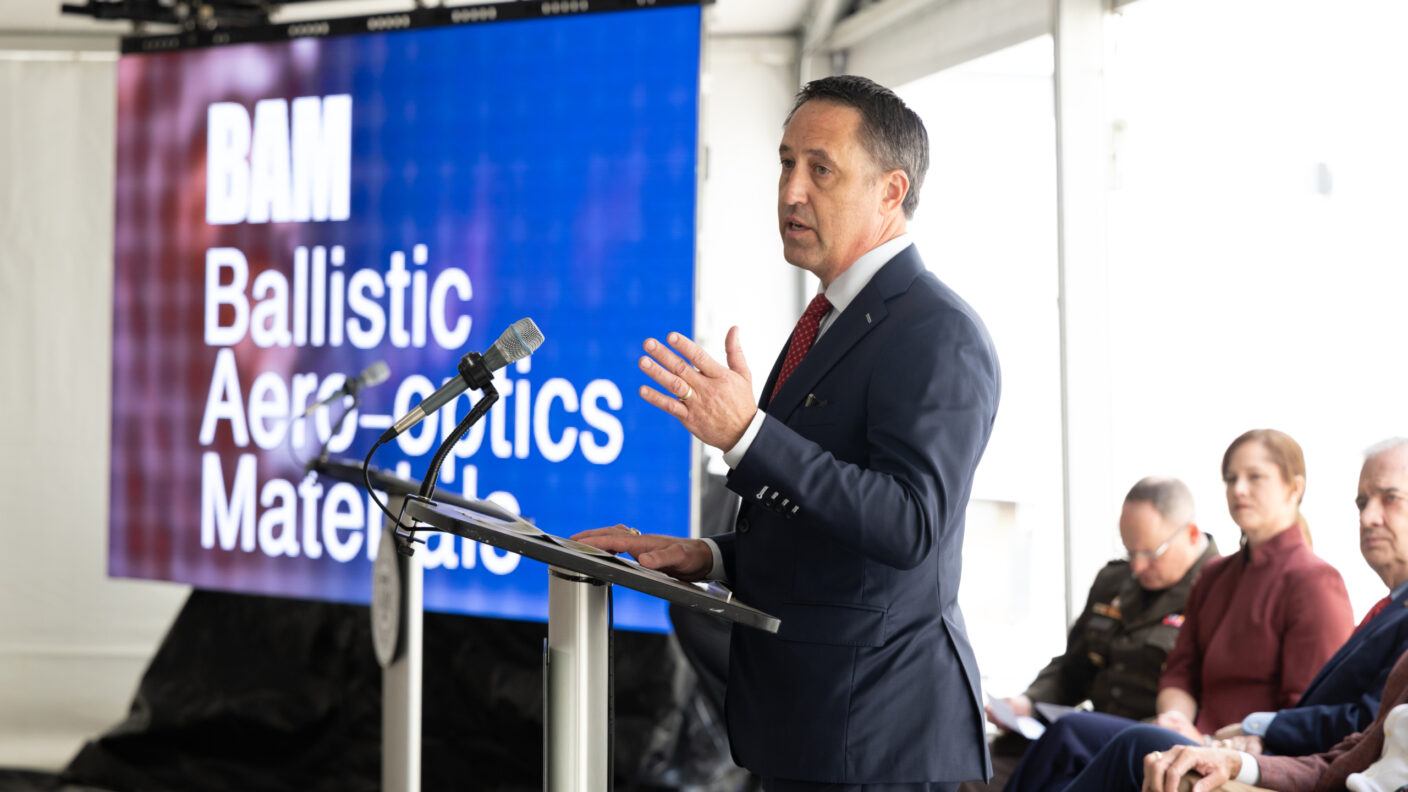
BAM Range Will Help ‘Bring Fear to Our Enemies’
Texas A&M is home to the Ballistic Aero-Optics and Materials (BAM) Range, the nation’s biggest and most advanced enclosed testing range for laser and hypersonic weapons innovation, including new types of materials that can withstand hypervelocity impacts. Sponsored by the U.S. Army, NASA, the State of Texas and The Texas A&M University System, the BAM Range will conduct national security experimental testing for government and industry partners as well as for space exploration and other types of advancements.
Read More About the BAM Range
Defending Against Plant Diseases in Citrus and Potato Crops
Through funding from the U.S. Department of Agriculture, Texas A&M AgriLife Research scientists have developed a new approach to countering citrus greening and potato zebra chip diseases, two economically devastating agricultural diseases in East Texas. The team’s results show encouraging effects for the two spinach antimicrobial peptides added independently to citrus and potatoes. Based on these findings, researchers now plan to explore broader applications and expand the technology’s possibilities.
Read More About Plant Diseases in Citrus and Potato Crops
Breakthrough Smart Plastic: Self-Healing, Shape-Shifting and Stronger Than Steel
Aerospace engineering and materials science researchers at Texas A&M have uncovered new properties of an ultra-durable, recyclable, smart plastic—paving the way for transformative applications in the defense, aerospace and automotive industries. Sponsored by the Air Force Office of Scientific Research and in collaboration with ATSP Innovations, this breakthrough represents an emerging class of valuable new materials.
Read More About Self-Healing PlasticsTexas Impact by the Numbers
Rising to Meet National Needs
With nearly 150 years of excellence, Texas A&M values its partnership with federal agencies to make ground-breaking research discoveries that fuel our nation's dominance across a range of critical fields. Below are just a few areas of impact.
National Security
From building the nation’s biggest and most advanced enclosed testing range for laser and hypersonic weapons and developing materials that can manage heat and scrub CO2 in circulated breathing apparatuses for warfighters, to pioneering self-healing materials and leading discoveries in nuclear science, Texas A&M's leadership in artificial intelligence, biosecurity, cybersecurity, chemistry and military science positions it as the ideal institution to advance national defense solutions.
Improving Health
At Texas A&M, health innovation starts with service — to rural families, to frontline workers, to veterans. Our scientists are creating a nasal spray that may delay Alzheimer’s disease progression by years, deploying an advanced vessel-chip to replicate real-life blood vessels to cure vascular disease, developing new cell therapies for spinal cord injuries in veterans and producing “goldilocks” radioisotopes to treat cancer without harmful radiation effects.
Food, Energy and Water Security
Whether through eradicating hard-to-treat crop diseases, utilizing artificial intelligence to produce damage and recovery assessments after tornados, forecasting ecological needs for wetlands to protect the ocean food web and human infrastructure during hurricanes, or developing an innovative and domestically sourced battery, Texas A&M is dedicated to meeting the challenges raised by global shifts in the risks associated with food, energy and water securities.
Space Exploration
By leveraging Texas A&M’s expertise and resources while bringing together stakeholders from civilian, commercial and defense, we remain a leader in space exploration. On earth we’re building robots and virtual assistants, making spacecraft reusable, pioneering aerospace medicine and leading a national consortium on in-space operations. We will also be the first university with private access to a flight facility on the International Space Station, conducting real research in space year-round.

Michael J. Hardy
Deputy Chief Government Relations Officer & Director of Federal Relations- mjhardy@tamu.edu
- 979-845-0117